Workshops and Seminars
InfraLife aims at gathering stakeholders across sectors with the goal to spur new cross-sectorial collaborations. As a part of this work, InfraLife is organizing challenge-driven and technology-driven workshops, seminars and dialogues focusing around a certain biological/medical issue or a certain technology or method. The goal is to allow researchers from different sectors to meet, and to learn more about the potential of the research infrastructures as well as how the available techniques can help address specific research questions and be a part of the solution to the research challenge at hand.
At this page, you can see some of the activities that falls within the “Workshops and Seminars” category organized by InfraLife.
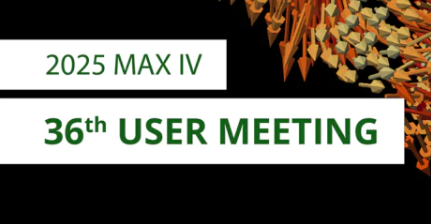
MAX IV user meeting 2025
Life Science collaboration between MAX IV, SciLifeLab and ESS
InfraLife will be hosting one session at the MAX IV user meeting 13-14-15 January 2025 including:
*Overview of the InfraLife project, introduction to SciLifeLab & ESS and panel discussion
*Integrated Structural Biology in Sweden, a collaborative and scientific example
*Spatial Imaging Methods, a collaborative scientific example with MAX IV and SciLifeLab
*Summary and future of the collaboration
Workshop
Infection Biology Across Scales
The European Molecular Biology Laboratory (EMBL), SciLifeLab, InfraLife and the Laboratory for Molecular Infection Medicine Sweden (MIMS) invite you to an in-person workshop on infection biology on 3-4 February 2025 in Umeå. The workshop will focus on exploring complementary platforms and capabilities of the organizations in light of the most important scientific challenges facing infection research. In the Session II: Imaging infection – from organisms to structure, Esko Oksanen, European Spallation Source (ESS), InfraLife project group and Lund University will give a talk.


Exchange dialogues
Pushing the development of research infrastructures
The InfraLife “exchange dialogue” format is informal, short, online meetings where infrastructure representatives from MAX IV, SciLifeLab and ESS can get up to date with the latest possibilities at the respective sites and discuss future collaborations and synergies to push development of research infrastructure.
Webinar
Industry case webinars: “How SciLifeLab and MAX IV collaborated with SARomics Biostructures in drug discovery projects”
On January 25 2024, 12:00-13:30 InfraLife, together with partner organisations Lif and SwedenBIO, organise a joint webinar on how SciLifeLab and MAX IV industry use can contribute to drug discovery.
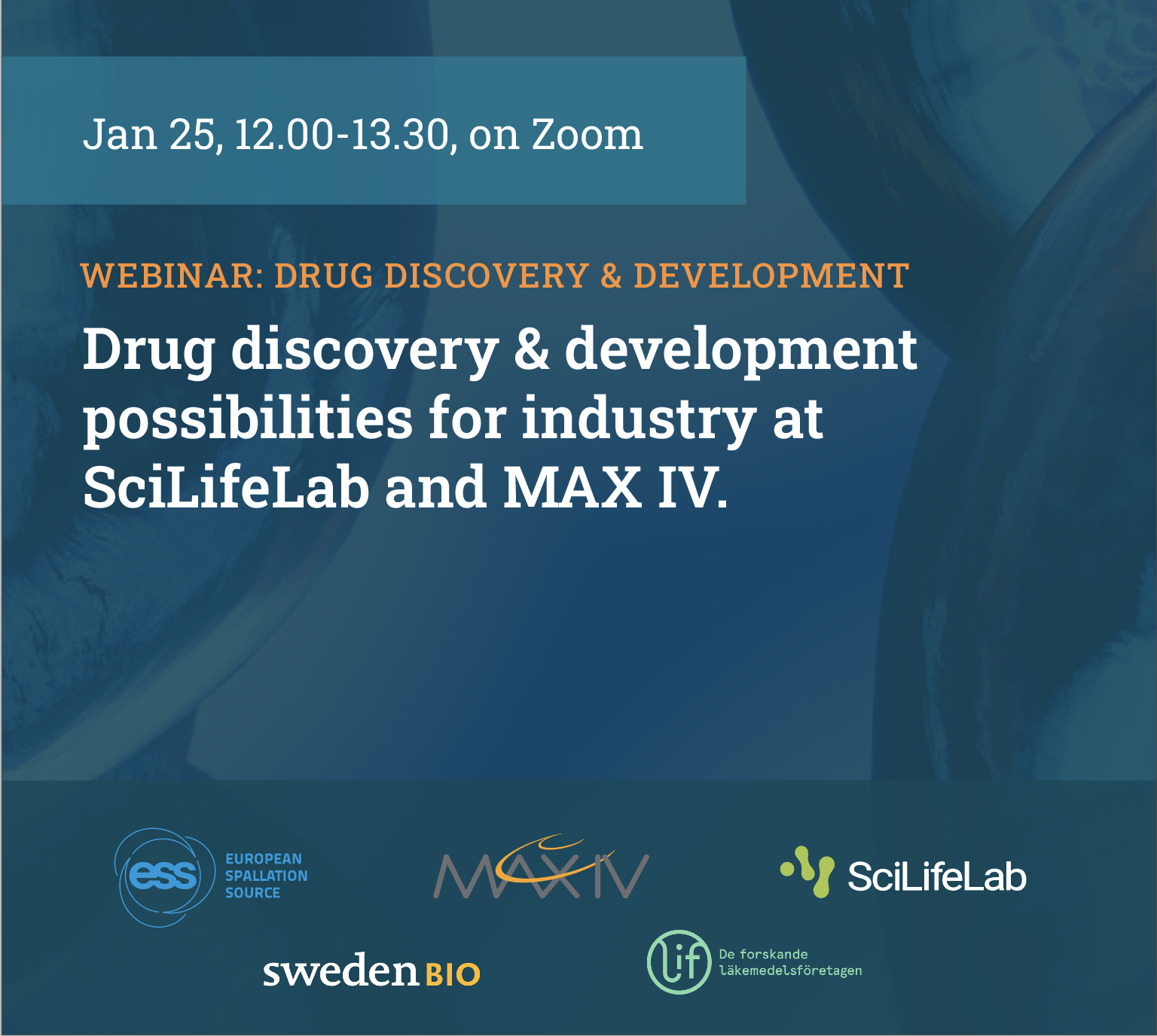
Webinar
Joint webinar with Lif: “How can SciLifeLab, MAX IV and ESS contribute to drug discovery and development?”
On November 12 2021, InfraLife, together with partner organization Lif, organized a joint webinar on how the SciLifeLab, MAX IV and ESS can contribute to drug discovery and development.
Workshop
Workshop on Antimicrobial resistance (AMR)
On June 2 2021, The first InfraLife workshop gathered stakeholders in the field of antimicrobial resistance (AMR) for a joint discussion.